Tokyo
Private jet charter and flights to Tokyo
Private Jet Charter To/From Tokyo - Airports, Routes & Prices
Country
- JAPAN
Language(s)
Currency
Tokyo is the most extraordinary city on earth. The world’s largest metropolitan area — home to 37 million people, more Michelin stars than any city in France, the planet’s most disciplined service culture, and a seamless fusion of ancient tradition and radical technological innovation — Tokyo represents a private aviation destination in a class entirely its own. For the world’s most discerning business travelers, cultural explorers, and luxury lifestyle clients, Centurion Jets delivers a Tokyo charter experience equal to the city’s own extraordinary standards.
Flying private to Tokyo is not simply a matter of comfort or convenience — it is the only rational choice for executives managing Pacific Rim operations, for ultra-high-net-worth travelers who value time above all else, and for groups whose schedules, privacy requirements, or cargo needs make commercial aviation impractical. The transpacific flight distance — typically 6,700 to 7,500 miles from North America, 5,800 miles from Dubai, and 5,500 miles from London — means that aircraft selection and operator capability are paramount decisions. Centurion Jets global fleet access, Japan overflight permit expertise, and 24/7 flight operations team make us the definitive choice for Tokyo private jet charter.
Overview
Tokyo (東京) — the Eastern Capital — serves as the political, economic, cultural, and technological nerve center of Japan and one of the undisputed power nodes of the global economy. The Greater Tokyo Area generates an estimated GDP of $2.0 trillion annually, making it the single largest metropolitan economy in the world. It is the headquarters city for 51 Fortune Global 500 companies including Toyota, Mitsubishi, Sony, SoftBank, Honda, Panasonic, and Nippon Telegraph and Telephone — making it an indispensable destination for the world’s most senior corporate leadership.
Japan’s private aviation market has evolved significantly in recent years. While historically the country maintained restrictive general aviation regulations that limited private jet operations, progressive liberalization of Haneda Airport’s international slots, improved FBO facilities, and Japan’s reopening to international visitors have made Tokyo one of Asia’s fastest-growing private jet destinations. Centurion Jets has been operating Japan private charter since the country’s aviation market first opened to international demand, and our operational expertise in the Tokyo market — including MLAT monitoring requirements, Japan Civil Aviation Bureau (JCAB) clearances, and slot coordination — is unmatched.
Why Centurion Jets for Tokyo Japan overflight permit expertise and JCAB clearance coordination. Haneda Airport priority slot management. Multilingual ground concierge network in Tokyo. Access to ultra-long-range fleet for transpacific non-stop capability. 24/7 Pacific operations support. Full Japan customs and immigration pre-clearance. Transparent pricing — no hidden international handling fees. |
Private Jet Pricing – To & From Tokyo
Tokyo private jet charter involves some of the longest and most operationally complex routes in international private aviation. The transpacific corridor from North America to Japan is among the most technically demanding in the world, requiring ultra-long-range aircraft with ETOPS-equivalent capability, Pacific oceanic routing clearances, and precise fuel planning. Centurion Jets manages all operational logistics transparently, so clients receive an all-inclusive quote with no surprises. All figures below are estimates based on current market rates — contact us for a live, confirmed quote.
Tokyo Inbound Route Pricing Guide
Route | Aircraft Type | Est. Price Range | Flight Time | Pax Capacity |
|---|---|---|---|---|
New York (TEB) → Tokyo (HND) | Ultra-Long-Range | $185,000 – $260,000 | ~13h 30m | 14–19 |
Los Angeles (VNY) → Tokyo (HND) | Ultra-Long-Range | $145,000 – $210,000 | ~10h 30m | 14–19 |
Chicago (PWK) → Tokyo (HND) | Ultra-Long-Range | $175,000 – $250,000 | ~12h 45m | 14–19 |
London (LCY/FAR) → Tokyo (HND) | Ultra-Long-Range | $175,000 – $245,000 | ~11h 45m | 14–19 |
Dubai (DWC) → Tokyo (HND) | Ultra-Long-Range | $140,000 – $195,000 | ~9h 30m | 14–19 |
Singapore (SIN) → Tokyo (HND) | Heavy Jet | $85,000 – $130,000 | ~7h 00m | 10–16 |
Hong Kong (HKG) → Tokyo (HND) | Heavy Jet | $65,000 – $100,000 | ~4h 15m | 10–16 |
Seoul (GMP) → Tokyo (HND) | Midsize Jet | $35,000 – $55,000 | ~2h 00m | 7–9 |
Shanghai (SHA) → Tokyo (HND) | Midsize Jet | $42,000 – $65,000 | ~2h 45m | 7–9 |
Beijing (PEK) → Tokyo (NRT) | Midsize Jet | $48,000 – $72,000 | ~3h 30m | 7–9 |
Sydney (SYD) → Tokyo (HND) | Ultra-Long-Range | $155,000 – $215,000 | ~9h 45m | 14–19 |
Tokyo (HND) → Osaka (ITM) | Light Jet | $18,000 – $28,000 | ~0h 55m | 6–8 |
Tokyo (HND) → Sapporo (CTS) | Light Jet | $22,000 – $32,000 | ~1h 20m | 6–8 |
Tokyo (HND) → Okinawa (OKA) | Midsize Jet | $35,000 – $52,000 | ~2h 10m | 7–9 |
Transpacific Advisory: Tokyo routes from North America require ultra-long-range aircraft with 7,000+ mile capability. Centurion Jets provides full Pacific routing, oceanic clearance, and fuel stop coordination. Contact us for your customized Japan itinerary. |
Key Cost Factors for Tokyo Private Jet Charter
Tokyo private jet pricing carries several unique cost components that are specific to Japan and the transpacific corridor. Centurion Jets discloses all of these transparently in every quote:
- Overflight permits: China, and North Korean airspace restrictions require specific routing that adds flight time and cost. Polar routes (over the Arctic) are the fastest North America-Tokyo connection but require specialized cold-weather operational certification
- Japan Civil Aviation Bureau (JCAB) general declaration and landing permission fees: These are fixed government charges applied to all private aircraft landing in Japan
- FBO handling surcharges at Haneda (HND): Slot fees, ramp handling, and passenger terminal access at HND carry significant premium charges versus most Western airports
- Ferry and repositioning costs: Most ultra-long-range aircraft must be repositioned to your departure airport before the transpacific leg begins
- Crew hotel and rest requirements: Japan JCAB and FAA crew rest regulations mandate minimum rest periods for long-haul operations, which may require a crew change or overnight in Tokyo
- Customs and immigration agent fees: Japan requires formal customs brokerage for all private aircraft entries — Centurion Jets manages this directly
Tokyo Destination Overview
Tokyo defies easy description. It is simultaneously the world’s most efficient megacity and its most unpredictable creative laboratory — a place where a single city block can contain a 200-year-old Shinto shrine, a three-Michelin-star restaurant inside a 52-story skyscraper, a vinyl record store staffed by a retired jazz musician, and a robot café that has been operating since 1994. For private jet travelers, this density and diversity of excellence is Tokyo’s core value proposition: nowhere else on earth offers so much extraordinary experience within such a geographically compact area.
The greater Tokyo metropolitan area encompasses the special wards of Tokyo (often called the 23 Wards), the cities of Yokohama, Kawasaki, Chiba, and Saitama, and extends across four prefectures with a combined population larger than the entire country of Canada. The city’s Gross Metropolitan Product exceeds that of South Korea, Australia, or Spain taken as whole nations. It hosts more Fortune 500 headquarters than any Asian city, operates the world’s largest urban rail network (with an average delay of under 60 seconds), and maintains public safety standards that make it consistently one of the world’s most secure capitals.
For private jet travelers, Tokyo’s attraction spans three distinct dimensions: business excellence, cultural immersion, and gastronomic supremacy. Japan’s culture of omotenashi — the philosophy of wholehearted, anticipatory hospitality — pervades every interaction from a three-star kaiseki meal to a convenience store transaction, creating an atmosphere of effortless quality that resonates powerfully with the expectations of Centurion Jets clientele.
Private Jet Interiors
The scale of transpacific private aviation demands aircraft and cabin environments that function as airborne residences rather than simply elevated transport. Centurion Jets carefully matches cabin specifications to the demands of each Tokyo route — prioritizing sleep capability, productivity infrastructure, and culinary quality for long-haul legs.
Ultra-Long-Range Jets — The Only Choice for Transpacific Tokyo Flights
For North America, Europe, the Middle East, and Australia-originating Tokyo flights, the ultra-long-range jet category is not optional — it is the operational requirement. The Gulfstream G700 (range: 7,500 nautical miles), Bombardier Global 7500 (7,700 nautical miles), and Dassault Falcon 10X (7,500 nautical miles) are the definitive aircraft for non-stop Tokyo operations from the US East Coast, UK, and Dubai. These aircraft deliver cabin environments of extraordinary sophistication: the Gulfstream G700 features the largest cabin in business aviation with four distinct living zones; the Bombardier Global 7500 includes a dedicated crew rest area, a full galley with oven and Nespresso system, and four separate cabin zones including a private stateroom with lie-flat bed; the Dassault Falcon 10X offers the widest cross-section cabin in its class with a stand-up walk-in shower on selected configurations.
For Centurion Jets clients flying Los Angeles to Tokyo (approximately 10.5 hours) or New York to Tokyo (approximately 13.5 hours), arriving refreshed and rested is not a luxury — it is a business necessity. Ultra-long-range jets make this possible in a way no commercial aircraft can replicate: private sleep suites, upon request personalized catering prepared to your specification before departure, and the ability to conduct sensitive business conversations without the exposure inherent in any commercial cabin.
Heavy Jets — Asia-Regional Tokyo Flights
For regional Asian routes — Singapore to Tokyo, Hong Kong to Tokyo, Sydney to Tokyo — heavy jets including the Gulfstream G550 (6,750 nautical miles), Bombardier Global 6500, and Dassault Falcon 7X provide non-stop capability with generous cabin space for 12–16 passengers. These aircraft feature stand-up cabins, full galley service, multiple seating zones, and sophisticated entertainment and communications systems. For the Hong Kong-Tokyo route (approximately 4.25 hours), a heavy jet provides significant cost savings versus an ultra-long-range aircraft while delivering a comparably excellent cabin experience.
Midsize Jets — Northeast Asia Short-Haul Routes
For shorter regional hops — Seoul to Tokyo, Shanghai to Tokyo, and intra-Japan routes (Tokyo to Osaka, Tokyo to Sapporo, Tokyo to Okinawa) — midsize jets including the Bombardier Challenger 350 and Cessna Citation Longitude provide the optimal balance of cabin comfort, speed, and operating economy. The 7–9 passenger configuration serves corporate groups and family travel efficiently, with full-service galley catering, WiFi connectivity, and stand-up cabin access on super-midsize configurations.
Intra-Japan Operations — Light Jets & Turboprops
Japan’s domestic private aviation market, while historically limited, has expanded with several regional general aviation airports accessible to light jets and turboprops. For clients wishing to visit Hokkaido (New Chitose Airport, CTS), Kyoto (via Osaka Itami, ITM), Hiroshima (HIJ), Nagasaki (NGS), or Okinawa (OKA), Centurion Jets coordinates multi-leg Japan itineraries. Light jets including the Cessna Citation CJ4 and Embraer Phenom 300E are well-suited for these routes, providing a dramatically faster and more private alternative to Japan’s Shinkansen bullet train on city-pair connections exceeding 300 kilometres.
Tokyo Airports for Private Jet Charter
Tokyo Haneda Airport (HND) — Preferred Private Aviation Gateway
Tokyo International Airport Haneda (IATA: HND) is the preferred arrival point for private jet clients visiting central Tokyo. Located just 14 kilometres from the Tokyo city center in the Ota ward, Haneda’s proximity dramatically reduces ground transfer time versus Narita — typically 25–40 minutes versus 60–90 minutes from Narita. For the business traveler whose time in Tokyo is compressed — arriving for a single day of meetings before onward travel — Haneda is the unambiguous operational choice.
Private aviation arrivals at Tokyo Haneda Airport (HND / RJTT) are supported by facilities operated by Japan Airport Terminal Co., Ltd., with dedicated private aviation handling areas that facilitate customs and immigration processing, ramp access, and coordination of ground transportation when requested. Landing slot allocation at Haneda is administered by Japan’s Ministry of Land, Infrastructure, Transport and Tourism (MLIT) and requires advance coordination for private jet operations. The Centurion Jets operations team coordinates slot requests and handling arrangements as part of the charter planning process for Tokyo flights. The airport’s primary international runways—RWY 16L/34R and 16R/34L—support transpacific arrivals and departures and are equipped with precision ILS systems capable of Category III operations during low-visibility conditions.
Narita International Airport (NRT) — International Operations Hub
Narita International Airport (IATA: NRT) — located in Narita City, Chiba Prefecture, approximately 60 kilometres east of central Tokyo — handles the majority of Japan’s long-haul international commercial traffic and offers more developed private aviation facilities than Haneda for certain aircraft categories. The general aviation apron at Narita International Airport (NRT / RJAA) offers greater capacity for large ultra-long-range aircraft and can provide more flexible handling arrangements for jets requiring extended parking. Dedicated ground handling services support private aviation arrivals, with customs and immigration processing available for international flights. For clients arriving on ultra-long-range aircraft that require additional ramp space, or for travelers whose business destinations are located in eastern Tokyo or Chiba Prefecture, Narita can be a practical alternative arrival airport. Centurion Jets can assist in coordinating ground transportation from Narita to central Tokyo—typically around 60 minutes by highway. The Narita Express also provides a convenient rail connection to Tokyo Station for travelers not requiring private ground transfers.
Chofu Airport (RJTF) — Tokyo Metropolitan Satellite
Chofu Airport, located in Chofu City, western Tokyo Metropolis, is a general aviation airport serving primarily domestic Japanese operations. With a 800-metre runway, Chofu can accommodate turboprops and small light jets for intra-Japan operations. For clients based in the Tama area of western Tokyo or visiting companies in the Musashino/Tachikawa business corridor, Chofu provides a dramatically closer arrival point than either Haneda or Narita. Centurion Jets coordinates Chofu operations for select turboprop and light jet intra-Japan itineraries.
Osaka Itami Airport (ITM) — Kansai Region Gateway
For clients combining Tokyo with Kyoto, Osaka, or Kobe — the cultural and commercial heart of western Japan — Osaka Itami Airport (ITM) serves as the ideal regional arrival point. A 55-minute private jet flight from Tokyo Haneda, Itami provides access to Kyoto in 35 minutes by road, Osaka in 20 minutes, and Nara in 45 minutes. Centurion Jets regularly coordinates Tokyo-Osaka multi-city Japan itineraries, often pairing a business focus in Tokyo with a luxury cultural program in Kyoto or Osaka.
Overflight Routing — A Critical Tokyo Consideration
Routing transpacific private jet flights to Tokyo is among the most operationally complex considerations in long-range charter planning. Depending on weather systems, winds aloft, and airspace availability, several North Pacific routing corridors may be used. One common routing passes near the Aleutian Islands, which can extend total flight time by approximately 60–90 minutes depending on prevailing conditions. The Centurion Jets operations team evaluates available routing options for each Tokyo itinerary and advises clients on the most efficient flight profile based on aircraft performance, airspace availability, and current meteorological conditions.
Popular Aircraft for Tokyo Flights
The Tokyo route demands a specific subset of the private aviation fleet — aircraft with the range, performance, and cabin sophistication to execute transpacific operations at the highest level. Below is Centurion Jets comprehensive guide to the most chartered aircraft categories for Tokyo flights.
Aircraft | Category | Max Range | Seats | Best Tokyo Route |
|---|---|---|---|---|
Light Jet | 2,165 mi | 7 | Intra-Japan regional hops | |
Light Jet | 2,080 mi | 8 | Tokyo → Osaka, Sapporo | |
Midsize Jet | 2,040 mi | 8 | Seoul, Shanghai, Beijing | |
Super Midsize | 3,200 mi | 10 | Hong Kong, Singapore | |
Super Midsize | 3,600 mi | 10 | Hong Kong, Bangkok | |
Large Jet | 5,950 mi | 16 | Singapore, Sydney (w/stop) | |
Heavy Jet | 6,750 mi | 16 | Singapore, Dubai, London | |
Ultra-Long-Range | 6,600 mi | 17 | Dubai, London, LA (w/stop) | |
Ultra-Long-Range | 7,500 mi | 19 | NYC, London, Dubai direct | |
Ultra-Long-Range | 7,700 mi | 19 | NYC, London, LA, Dubai | |
Dassault Falcon 10X | Ultra-Long-Range | 7,500 mi | 16 | NYC, London, Sydney |
Ultra-Long-Range | 7,500 mi | 19 | NYC, LA, Dubai, London |
Tokyo Travel Guide
Arriving in Tokyo by private jet reframes the entire experience of the city. While the logistics of transpacific commercial travel — 14-hour flights in business class, Narita immigration queues, luggage carousel delays, express train navigation — consume hours of a Tokyo trip before it has even begun, Centurion Jets clients touch down at Haneda, clear customs in minutes through a dedicated private terminal. To ensure a smooth arrival experience, any additional request or services — including chauffeured ground transportation, or preferred hotel accommodations — should be requested during the booking process so our team can coordinate arrangements in advance.
Business Travel in Tokyo
Tokyo’s business culture is among the most demanding and rewarding in the world. Relationships are paramount — the Japanese concept of nemawashi (careful relationship-building before formal decisions are made) means that business travel to Tokyo must be planned with sufficient time for relationship cultivation, not merely meeting attendance. Private jet clients visiting Tokyo for corporate purposes benefit from the efficiency and flexibility that charter provides: the ability to extend a Tokyo stay by 24 hours when a promising negotiation requires an additional day, or to depart early when business concludes ahead of schedule.
- Financial district: Marunouchi and Otemachi — the primary address for Japan’s top banks, securities firms, and global corporate headquarters
- Technology and startup corridor: Shibuya and Roppongi Hills — home to SoftBank Vision Fund, CyberAgent, DeNA, and major VC funds
- Trading and manufacturing: Nihonbashi and Shinbashi — traditional commercial districts with deep corporate heritage
- Government and regulatory: Kasumigaseki and Nagatacho — Japan’s administrative and political center
- Key venues: Tokyo International Forum, Palace Hotel Tokyo ballroom, Andaz Tokyo conference facilities
Tokyo’s Gastronomic World Record
Tokyo holds the most Michelin stars of any city in the world — with over 200 starred establishments in the metropolitan area alone, surpassing Paris, New York, and London combined. For private jet travelers who regard dining as integral to the travel experience, Tokyo represents the ultimate destination. Sukiyabashi Jiro in Ginza — the three-star sushi restaurant immortalized by the documentary Jiro Dreams of Sushi — remains one of the most sought-after reservations in the world, requiring months of advance planning and a Japanese-speaking intermediary. Joel Robuchon Tokyo in Ebisu, Ryugin in Roppongi, Saito, Sawada, and the kaiseki temples of Kyoto-trained chefs transplanted to Tokyo define the upper stratum of a restaurant scene that has no global equal.
- Ginza: Sukiyabashi Jiro, Sushi Saito (hardest reservation in Japan), Kyubey, Sushi Yoshitake
- Roppongi: Joel Robuchon Tokyo, Ryugin (Japanese nouveau cuisine), L’Atelier de Joel Robuchon
- Marunouchi: The Peninsula Lobby (afternoon tea), Fukudaya (traditional kaiseki)
- Shibuya: Narisawa (innovative Japanese cuisine with sustainability philosophy)
- Akasaka: Kikunoi (authentic Kyoto-style kaiseki in Tokyo by Living National Treasure chef Murata Yoshihiro)
Culture, Art & Experience
Tokyo’s cultural infrastructure is extraordinary in both scale and depth. The city’s museum landscape — spanning the Tokyo National Museum in Ueno (Japan’s oldest and largest), the Mori Art Museum’s contemporary collection in Roppongi Hills, teamLab Borderless (the world’s most visited single-artist museum), and the Nezu Museum in Aoyama — provides an art and culture program that can occupy days of serious exploration. The traditional arts — Noh, Kabuki (at the magnificent Kabukiza Theatre in Ginza), Sumo (at the Ryogoku Kokugikan arena) — provide irreplaceable windows into Japan’s cultural heritage.
- teamLab Borderless & Planets: World’s most visited digital art museums — advance booking essential
- Tokyo National Museum: Over 110,000 objects spanning 2,000 years of Japanese art history
- Kabukiza Theatre, Ginza: Traditional Kabuki performance — single-act tickets available for private jet clients with limited time
- Ryogoku Kokugikan: Sumo tournaments held in January, May, and September
- Hamarikyu Gardens: Tidal garden with traditional teahouse, minutes from Shiodome private offices
Tokyo Shopping — A World Standard
Tokyo’s retail landscape encompasses every register from Tokyo’s legendary department stores (Isetan Shinjuku, Takashimaya, Mitsukoshi Ginza) to the world’s most concentrated luxury fashion streetscape in Omotesando — Japan’s answer to Paris’s Avenue Montaigne. The Ginza district hosts flagship boutiques for every major French and Italian maison, with an aesthetic standard in store design and client service that frequently surpasses the brands’ European home markets. For private jet clients with serious watch or jewelry requirements, Tokyo’s auction houses and specialist dealers handle exceptional pieces from Patek Philippe, Richard Mille, and Japanese lacquer and metalwork artisans.
Day Trips from Tokyo by Private Jet or Train
Tokyo’s position as a base for Japan exploration is unmatched. Kyoto — Japan’s ancient imperial capital and the most culturally dense city in East Asia — is 2.5 hours by Shinkansen from Tokyo Station, or 55 minutes by private jet to Osaka Itami (ITM). Nikko’s UNESCO World Heritage shrine complex is 2 hours by train. Hakone — with its ryokan hot spring resorts, direct views of Mount Fuji, and the Hakone Open Air Museum — is 90 minutes by car from central Tokyo and delivers Japan’s most iconic luxury nature experience. Upon request during booking, Centurion Jets concierge coordinates multi-city Japan itineraries seamlessly across private jet, Shinkansen, and luxury ground transportation options.
Luxury Hotels in Tokyo
Tokyo’s luxury hotel landscape is one of the most competitive and exceptional in the world. Japanese hotel standards of service precision, cleanliness, and attention to detail are without global parallel — even properties outside the ultra-luxury tier deliver an experience that equals or exceeds the finest Western luxury hotels. The following represent the definitive choices for Centurion Jets private jet clients. To ensure a smooth arrival experience, any additional request or services — preferred hotel accommodations — should be requested during the booking process so our team can coordinate arrangements in advance.
The Peninsula Tokyo
The Peninsula Tokyo at 1-8-1 Yurakucho, Chiyoda, occupies an irreplaceable position in Tokyo’s luxury hotel hierarchy. Situated at the intersection of the Imperial Palace gardens and Ginza, with direct views of the palace moat and grounds, the Peninsula’s location is unrivaled in the city. Its 314 rooms and suites are among the largest in Tokyo, with Japanese-inspired design details and the brand’s signature technologically sophisticated bedside control systems. The rooftop Peter Restaurant and Bar commands some of the finest views of central Tokyo available in any hotel setting. The Peninsula’s resident fleet of Rolls-Royce Phantoms — available for private jet clients as part of integrated ground transfer arrangements — sets an arrival standard that perfectly complements a Centurion Jets charter.
Aman Tokyo
Aman Tokyo, occupying floors 33–38 of the Otemachi Tower in the heart of Tokyo’s financial district, is among the most architecturally breathtaking urban resort properties in the world. Its 84 suites — each exceeding 77 square metres and beginning on the 33rd floor — are designed around the Japanese concept of ma (negative space) and shoji (paper screen) aesthetics, filtered through Aman’s signature minimalist luxury vocabulary. The property’s onsen-style hot spring spa — featuring Japanese hinoki cypress bathing rooms, a 30-metre indoor pool, and a thermal bathing sequence inspired by traditional ryokan culture — is the finest urban wellness facility in the city. Aman Tokyo is consistently ranked among the top five hotels in Asia and delivers an experience of utter tranquility within one of the world’s most intense urban environments.
Palace Hotel Tokyo
Palace Hotel Tokyo occupies a premier position overlooking the Imperial Palace gardens from Marunouchi — the most prestigious business address in Japan. Its 290 rooms are the choice of visiting heads of state, Fortune 500 CEOs, and senior government officials who require complete discretion and a direct connection to Tokyo’s financial and governmental epicenter. The hotel’s CROWN restaurant, featuring Imperial Palace garden views from the 28th floor, is arguably the finest power-dining venue in Japan. For Centurion Jets corporate clients whose Tokyo visit centers on high-stakes meetings in Marunouchi or Nagatacho, the Palace Hotel’s combination of location, discretion, and service excellence is unmatched.
Park Hyatt Tokyo
The Park Hyatt Tokyo, immortalized globally by Sofia Coppola’s 2003 film Lost in Translation, occupies floors 39–52 of the Shinjuku Park Tower in western Tokyo. Its 177 rooms and suites — all above the 39th floor with panoramic Tokyo and Mount Fuji views on clear days — represent one of the most dramatic urban hotel experiences available in Asia. The New York Bar on the 52nd floor, with its jazz programme and skyline panoramas, is one of Tokyo’s most beloved institutions. The hotel’s facilities — including one of Tokyo’s finest hotel pools and spa — attract a sophisticated international clientele of architects, designers, cultural figures, and senior executives.
Azabudai Hills Residences (Mori JP Tower)
The newly opened Aman Residences and The Tower hotel within the Azabudai Hills development in Minato — completed in 2024 as the tallest building in Japan at 330 metres — represent Tokyo’s newest ultra-premium hospitality destination. The Aman Residences at Azabudai Hills offer private jet clients access to Tokyo’s most technologically advanced and architecturally significant new urban destination, combining serviced residence-style accommodation with Aman’s complete service ecosystem. This property is particularly appealing for extended Tokyo stays and for clients who value the privacy and spatial comfort of a residential model over a traditional hotel configuration.
Hoshinoya Tokyo
For private jet clients seeking an authentic Japanese hospitality experience within the city, Hoshinoya Tokyo in Otemachi delivers a traditional ryokan experience elevated to a 17-story tower format. Guests remove shoes at a designated boundary on their floor, don yukata robes, and access roof-level onsen in the heart of the financial district. Breakfast is served in the traditional kaiseki style. Hoshinoya Tokyo is the choice of sophisticated private aviation travelers who wish to experience Japan’s omotenashi philosophy in its most authentic residential format, without the travel time required to reach a traditional rural ryokan.
Tokyo Climate
Tokyo’s climate is humid subtropical, characterized by four distinct seasons that each offer a different and compelling travel proposition. Unlike destinations whose appeal concentrates in a single season, Tokyo rewards private jet visitors throughout the year — though certain periods carry specific advantages for travel planning and aviation operations.
Spring (March – May) — Cherry Blossom Season
Late March through mid-April is Japan’s most celebrated and most in-demand travel window — the sakura (cherry blossom) season. Tokyo’s parks — Shinjuku Gyoen, Yoyogi Park, Ueno Park, Chidorigafuchi moat around the Imperial Palace — transform into extraordinary spectacles of pink and white blossoms that last for approximately 2 weeks before falling. Spring temperatures (10–20°C / 50–68°F) are ideal for outdoor exploration. Centurion Jets sees its highest Tokyo demand concentration in this period — book aircraft and hotels 6–8 weeks in advance for late March and early April trips. Aviation weather in spring is generally favorable with good visibility, occasional frontal systems, and minimal convective activity.
Summer (June – August) — Typhoon Awareness
Tokyo summers are warm and humid, with temperatures reaching 32–35°C (90–95°F) and humidity levels that can be intense. June is Japan’s rainy season (tsuyu), bringing overcast skies and frequent rainfall without the drama of major storms. July and August bring genuine summer heat alongside the risk of typhoon influence — western Pacific typhoons occasionally track toward or through Japan in August and September, potentially causing aviation delays or rerouting. Centurion Jets flight operations monitors typhoon tracking in real time and advises clients proactively on any required operational adjustments. Despite the weather, summer in Tokyo offers extraordinary experiences: Sumida River Fireworks Festival, Tokyo’s incredible summer festival (matsuri) calendar, and the unique energy of a Japanese summer city.
Autumn (September – November) — Japan’s Finest Season
September through November is arguably Japan’s finest travel season — combining the spectacle of koyo (autumn foliage) from late October through November with comfortable temperatures (12–22°C / 54–72°F), clear skies, and Japan’s harvest-season culinary excellence. October is peak season for private jet travel to Japan from the US, UK, and Gulf region — book 4–6 weeks in advance. The combination of autumn foliage viewing in Tokyo’s parks, a Kyoto cultural extension, and the world’s best autumn produce driving the restaurant scene makes October–November the most complete Tokyo travel proposition of the year.
Winter (December – February) — Dry, Clear & Uncrowded
Tokyo winters are crisp and generally dry, with temperatures ranging from 2–12°C (36–54°F) and significantly clearer skies than other seasons — winter is the most reliably clear period for views of Mount Fuji from Tokyo (best from elevated western Tokyo locations on still mornings). Crowd levels are substantially lower than spring and autumn, and hotel pricing softens meaningfully. For private jet clients whose primary objective is business rather than cultural tourism, winter is Tokyo’s most efficient travel season. The Christmas-New Year period (mid-December through January 3rd) sees Japan observe a cultural holiday period — many businesses and some restaurants are closed, making this a less optimal period for business-focused travel.
Empty Leg Flights to/from Tokyo
The Tokyo private jet market generates empty leg opportunities that, while less frequent than equivalent inventory in European or US domestic markets, represent extraordinary value propositions when they arise. The transpacific empty leg corridor — aircraft returning from Tokyo to the US West Coast or from Tokyo to London on repositioning legs — is one of the highest-value opportunities in global private aviation, with discounts of 50–75% on routes that ordinarily cost $145,000–$260,000.
Tokyo Empty Legs — How They Work A transpacific Tokyo empty leg arises when an ultra-long-range jet has delivered passengers to Tokyo and must reposition to its next revenue assignment — typically in Los Angeles, San Francisco, New York, London, or Dubai. The operator lists this segment as an empty leg at dramatically reduced pricing. Given the high base cost of transpacific operations, the absolute dollar savings on a Tokyo empty leg can exceed $100,000 versus the standard one-way charter rate. Centurion Jets maintains real-time Tokyo empty leg monitoring and provides instant alerts to registered clients. |
Most Active Tokyo Empty Leg Corridors
- Tokyo (HND/NRT) → Los Angeles (VNY/LAX): The highest-value transpacific empty leg — occurs when US West Coast ultra-long-range jets reposition after Tokyo deliveries
- Tokyo (HND) → San Francisco (SFO/SQL): Similar to LA corridor, with strong Bay Area/Silicon Valley corporate demand generating consistent repositioning activity
- Tokyo (HND) → New York (TEB/JFK): Less frequent but extremely high-value — $185,000+ charter value available at 50–75% discount on repositioning legs
- Tokyo (HND) → London (LCY/FAR): Trans-Eurasian repositioning legs, often via polar or Russian routing — 11–12 hour segments
- Tokyo (HND) → Dubai (DWC): Growing corridor as Gulf-based ultra-long-range operators increase Japan activity
- Tokyo (HND) → Hong Kong: Regional empty legs — shorter duration, more frequent, excellent value on heavy jet repositioning
- Tokyo (HND) → Singapore: Southeast Asia repositioning on heavy and ultra-long-range jets
- Tokyo (HND) → Seoul (GMP): Short-haul regional repositioning — midsize jet frequency, multiple weekly opportunities
Important considerations for Tokyo empty leg clients: transpacific empty legs require the same operational complexity as standard booked charters — Japan customs and immigration processing, JCAB declarations, and slot coordination are all still required and are managed by Centurion Jets as part of the service. Schedule flexibility is essential for empty leg clients — Tokyo legs are particularly sensitive to weather and slot constraints that may cause short-notice departure time adjustments.
Charter Jet FAQ – Tokyo
How much does a private jet to Tokyo cost from New York?
A private jet from New York to Tokyo typically costs between $185,000 and $260,000 for the approximately 13.5-hour transpacific flight. This requires an ultra-long-range jet — Gulfstream G700, Bombardier Global 7500, or Dassault Falcon 10X — capable of non-stop operation across the Pacific. Pricing varies based on aircraft model, routing (polar vs. North Pacific), operator positioning costs, Japan landing fees, and seasonal demand. From Los Angeles, the shorter 10.5-hour route runs approximately $145,000–$210,000. Contact Centurion Jets for a live, Tokyo quote.
Which airport should I use for private jet arrival in Tokyo — Haneda or Narita?
Haneda Airport (HND) is the preferred private jet arrival airport for Tokyo visitors in virtually all cases. Located just 14km from central Tokyo versus Narita’s 60km, Haneda reduces your ground transfer time from approximately 90 minutes to 25–40 minutes — a significant advantage for business travelers with compressed schedules. Narita (NRT) is better suited for certain ultra-long-range jets requiring more ramp space, or for clients whose destinations are in eastern Tokyo or Chiba Prefecture. Centurion Jets manages slot applications at both airports and advises on optimal choice for each booking.
Do I need special permits to fly a private jet to Japan?
Yes. Private jet operations to Japan require several formal clearances: a Japan Civil Aviation Bureau (JCAB) General Declaration filing, landing permission from the Ministry of Land, Infrastructure, Transport and Tourism (MLIT), customs and immigration pre-notification, and overflight permits for airspace crossed en route (China, North Korea considerations apply to transpacific routing). Centurion Jets manages all permit filings, government declarations, and handler coordination as a standard service for every Japan booking — clients simply confirm their itinerary and we handle the regulatory infrastructure.
Can a private jet fly non-stop from Los Angeles to Tokyo?
Yes — with the right aircraft. Ultra-long-range jets including the Gulfstream G700 (7,500 nmi range), Bombardier Global 7500 (7,700 nmi), and Dassault Falcon 10X (7,500 nmi) can complete the Los Angeles-Tokyo route non-stop in approximately 10–10.5 hours. The approximately 5,500 nautical mile distance is comfortably within these aircraft’s range limits. From New York (approximately 6,700 nmi), the same aircraft types complete the route non-stop in 13–14 hours depending on winds and routing.
What is the best time of year to fly private to Tokyo?
For the complete Tokyo experience, late March to early April (sakura cherry blossom season) and October through November (koyo autumn foliage) are the most compelling travel periods. Both require early booking — 6–8 weeks in advance for spring, 4–6 weeks for autumn. For business travel, winter (January–February) offers the most efficient, uncrowded Tokyo environment with clear skies and lower hotel pricing. Summer (July–August) is viable but hot and humid, with typhoon season awareness required from August through September.
Are there empty leg flight opportunities to or from Tokyo?
Yes, though Tokyo transpacific empty legs are less frequent than European equivalent routes due to the smaller volume of total private jet movements. When they arise, they represent extraordinary value — a Tokyo to Los Angeles empty leg on an ultra-long-range jet can offer $100,000+ in savings versus the standard one-way charter rate. Centurion Jets monitors the Pacific market continuously and provides real-time alerts to clients registered for Tokyo empty leg notification. Regional Asian empty legs (Tokyo to Hong Kong, Tokyo to Seoul) are more frequent and provide meaningful cost savings on shorter segments.
Can Centurion Jets arrange a multi-city Japan itinerary?
Absolutely. Japan multi-city itineraries — typically combining Tokyo with Osaka/Kyoto and potentially Hiroshima, Hokkaido, or Okinawa — are a speciality of Centurion Jets’ Asia Pacific operations team. We coordinate all inter-city legs by private jet, with Shinkansen bullet train integration available for city pairs where train travel delivers superior point-to-point efficiency. Tokyo to Osaka (55 minutes by private jet, or 2h 30m by Shinkansen) is the most popular first extension.
What concierge services can Centurion Jets arrange in Tokyo?
Upon request, Centurion Jets’ Tokyo concierge network provides: Michelin restaurant reservations including near-impossible tables at Sushi Saito and Sukiyabashi Jiro (via specialist intermediaries with established relationships), Kabuki and Sumo ringside seat procurement, private tea ceremony and cultural experience arrangements, luxury vehicle hire (including Rolls-Royce and Toyota Century with professional driver), hotel priority suite access at Peninsula, Aman, Palace Hotel, and Park Hyatt, private shopping assistance at Ginza luxury maisons, and discreet security and close protection coordination for high-profile visitors.
Is it possible to take a private jet for a day trip from Tokyo to Kyoto?
A same-day Tokyo-Kyoto itinerary is absolutely achievable by private jet, though the Shinkansen is often the more efficient choice for this specific city pair given Tokyo Station-to-Kyoto Station timing (2h 15m) versus the combined private jet logistics (Haneda to Osaka Itami plus ground transfer to Kyoto adds up to 2h total). For groups of 8 or more, or for clients with cargo requirements, the private jet option provides clear advantages. Centurion Jets regularly coordinates Tokyo-Osaka private jet day trips and advises clients on the optimal transportation choice for each specific itinerary.
Book Your Tokyo Private Jet Charter Today
READY TO FLY PRIVATE TO TOKYO?
Get your instant Tokyo charter quote — any route, any aircraft, any date.
Phone (24/7): +1 (858) 683-3591
Request a Quote: request-a-quote
Empty Legs: www.centurionjets.com/empty-legs
Aircraft Fleet: Aircrafts
All Destinations: Destinations
Asia Pacific Private Jet Specialists. Japan Overflight Experts. 24/7 Support. Zero Hidden Fees.
- Tokyo Charter Features
- Tokyo Private Jet Charter Flights
- Airports near Tokyo
- Tokyo Frequently Asked Questions
Tokyo Available
Airport Options
Popular Routes
Which Aircraft Category is Best for my Charter Flight to Tokyo?

Frequently Asked Questions
First class still follows airline schedules and shared cabins. Private charter offers full aircraft privacy, flexible scheduling, and access to smaller airports.
Private jets access over 5,000 U.S. airports and tens of thousands globally — far more than commercial airlines.
Yes. You depart from private terminals (FBOs) with expedited security procedures.
Most operators prohibit smoking. Certain aircraft may allow it upon request.
Yes. Private jets excel at accessing secondary and executive airports.
Nagoya
Osaka
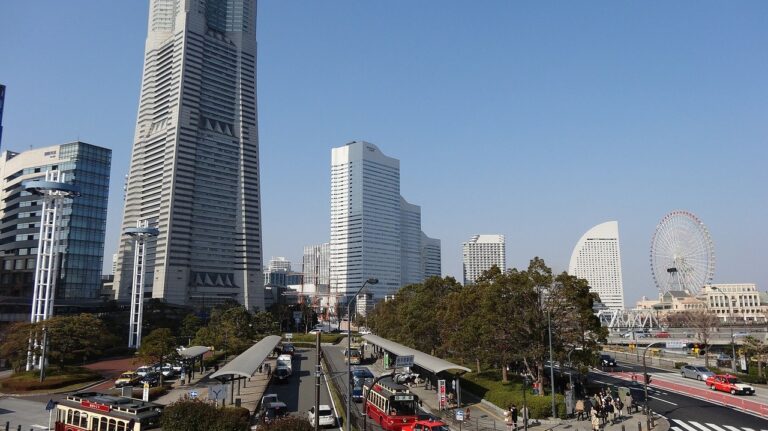
Yokohama